
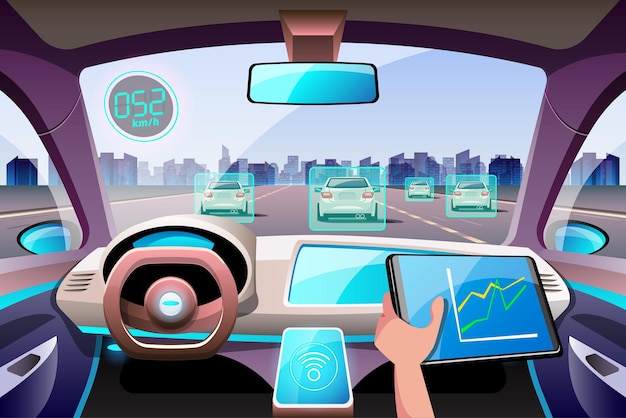
As we venture deeper into the 21st century, the landscape of transportation is evolving at a breakneck pace. The future of autonomous vehicles promises to be one of the most transformative advancements in automotive tech, reshaping how we think about travel and mobility. With every leap in technology, the dream of a self-driving world inches closer to reality. Here’s an exploration into the world of autonomous vehicle technology and the exciting self-driving car innovations that are setting the stage for a driverless future.
The Dawn of a New Era
The journey towards fully autonomous vehicles is akin to stepping into a new era of transportation. As technology advances, the future of driverless cars is becoming more tangible. These vehicles are equipped with sophisticated systems that enable them to navigate roads, make decisions, and respond to dynamic environments with minimal human intervention.
At the heart of this revolution are advancements in autonomous vehicle technology. Cutting-edge sensors, including LiDAR, radar, and cameras, work in unison to create a comprehensive understanding of the vehicle’s surroundings. These sensors feed real-time data to onboard computers, which process the information and control the vehicle’s movements. As these systems become more refined, the potential for fully autonomous driving grows increasingly promising.
Innovations Driving Autonomous Vehicles
The realm of self-driving car innovations is a hotbed of activity, with numerous breakthroughs pushing the boundaries of what’s possible. One significant development is the enhancement of artificial intelligence (AI) algorithms that underpin autonomous driving. These AI systems are becoming more adept at learning from vast amounts of data, allowing vehicles to make better decisions and handle complex driving scenarios with greater accuracy.
Another key innovation is the integration of V2X (Vehicle-to-Everything) communication technology. This technology enables vehicles to interact with each other and with infrastructure elements such as traffic lights and road signs. By sharing information about their position, speed, and intentions, vehicles can coordinate their actions and improve overall traffic flow and safety. The incorporation of V2X communication is a crucial step toward achieving a seamless and efficient autonomous driving experience.
Safety and Security Considerations
As we move closer to a future where autonomous vehicles become commonplace, safety remains a paramount concern. The integration of advanced safety features is essential to ensure that these vehicles can operate reliably and securely. Redundant systems, including backup sensors and fail-safe mechanisms, are being developed to mitigate potential failures and ensure continuous safe operation.
Moreover, cybersecurity is a critical aspect of autonomous vehicle technology. With vehicles becoming increasingly connected, protecting them from cyber threats is crucial. Automakers and technology developers are investing in robust security protocols to safeguard vehicles from hacking and other malicious activities. Ensuring the integrity and safety of autonomous systems is vital for gaining public trust and ensuring the widespread adoption of driverless cars.
Regulatory and Ethical Challenges
The future of autonomous vehicles also involves navigating a complex landscape of regulatory and ethical challenges. Governments and regulatory bodies are working to establish standards and guidelines for the testing and deployment of self-driving cars. These regulations must address safety, liability, and insurance issues to ensure that autonomous vehicles can be integrated into existing transportation systems effectively.
Ethical considerations also play a significant role in the development of autonomous vehicles. Decisions made by AI systems in critical situations—such as choosing between potential accident scenarios—raise important moral questions. As technology advances, it will be essential to develop ethical frameworks and guidelines to address these issues and ensure that autonomous vehicles operate in a manner that aligns with societal values.
The Road Ahead
The trajectory of self-driving car innovations suggests that the future of autonomous vehicles will be marked by increased sophistication and integration. As technology continues to evolve, we can expect to see more advanced features and capabilities being introduced. Vehicles will become more adept at handling complex driving conditions, making long-distance travel safer and more convenient.
In addition, the expansion of autonomous vehicle fleets could lead to new business models and changes in urban planning. Ride-sharing services may become predominantly autonomous, reducing the need for private car ownership and reshaping city infrastructure to accommodate driverless vehicles. This shift could lead to more efficient transportation systems and reduced traffic congestion, further enhancing the overall quality of life in urban environments.
Conclusion
The future of autonomous vehicles is a landscape rich with possibilities and transformative potential. As advancements in autonomous vehicle technology and self-driving car innovations continue to unfold, the vision of a driverless world becomes increasingly achievable. While challenges remain, the ongoing progress in safety, security, and regulatory frameworks promises a future where autonomous vehicles are an integral part of our transportation ecosystem. Embracing these changes and understanding their implications will be key to navigating the exciting journey ahead in automotive tech.


More Stories
The Future of Automotive: Where Innovation Meets the Open Road
Electric Vehicles vs. Fossil Fuels: The Ultimate Road Race for the Future
Rev Up Your Ride: Unconventional Car Reviews That Go Beyond the Mileage